
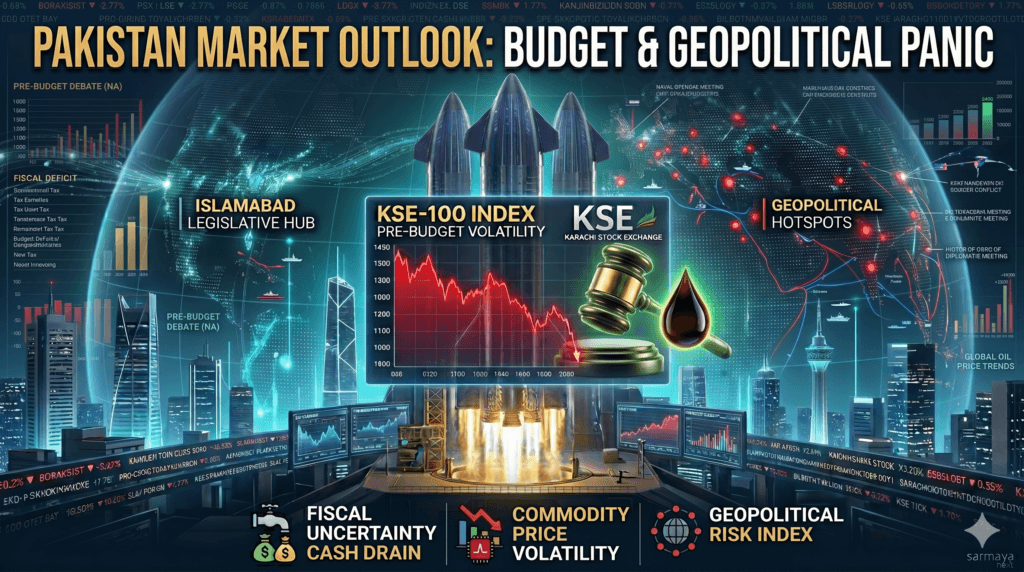
The Pakistan Stock Exchange (PSX) recently experienced a significant downturn, with the benchmark KSE-100 index plummeting over 1,500 points in a single session, sending jitters across the investment landscape. This sharp correction, a stark reminder of the market’s inherent volatility, was largely triggered by a confluence of escalating geopolitical tensions in the wider region and an acute sense of pre-budget panic gripping investors.
The Steep Descent: Unpacking the KSE-100’s Plunge
The KSE-100 index, a barometer of Pakistan’s economic sentiment, witnessed a precipitous fall, shedding approximately 1,580 points on a recent trading day, closing at 68,950 points after opening above the 70,500 mark. This translated into a loss of over 2.2% of its value in mere hours, wiping out billions from market capitalization and marking one of the largest single-day percentage drops in recent months. The selling pressure was broad-based, indicating a pervasive ‘risk-off’ sentiment rather than sector-specific concerns, although some sectors certainly bore a heavier brunt.
The sudden downturn caught many by surprise, especially after a period of relative stability and even upward momentum. However, seasoned analysts quickly pointed to the two primary antagonists: the ever-present shadow of regional geopolitical instability and the looming uncertainty surrounding the upcoming federal budget. These factors combined to create a potent cocktail of fear and apprehension, prompting both institutional and retail investors to liquidate positions and adopt a wait-and-see approach.
Related Coverage: Read our detailed report on Stocks Falling? 3 Steps to Stop Panic Selling Now.
The Dual Pressures: Geopolitics Meets Domestic Uncertainty
Geopolitical Headwinds
Pakistan’s equity market is inherently susceptible to regional and global geopolitical shifts, given its strategic location and reliance on international trade and capital flows. The recent escalation of tensions in the Middle East, particularly concerns around the Red Sea shipping disruptions and potential wider conflicts, cast a long shadow over global markets, and Pakistan was no exception. Investors grew wary of the potential ramifications:
- Oil Price Volatility: Any significant disruption in oil-producing regions or major shipping lanes invariably leads to a spike in international crude oil prices. As a net oil importer, Pakistan’s economy is highly vulnerable to such increases, which exacerbate its current account deficit and fuel inflationary pressures.
- Global Risk Aversion: Geopolitical instability typically triggers a ‘flight to safety’ among international investors, leading to capital outflows from emerging markets like Pakistan. This reduces liquidity and puts downward pressure on asset prices.
- Supply Chain Disruptions: Prolonged conflicts or blockades can disrupt global supply chains, affecting the availability and cost of imported raw materials crucial for Pakistan’s industries, from manufacturing to pharmaceuticals.
While the immediate impact on Pakistan might seem indirect, the psychological effect of heightened regional tensions on investor confidence is profound. Uncertainty breeds caution, and caution often translates into selling pressure.
Pre-Budget Panic and Fiscal Jitters
Closer to home, the impending federal budget, typically presented in June, has become a significant source of anxiety. The new government faces the formidable task of stabilizing the economy, managing a high fiscal deficit, and navigating ongoing discussions with the International Monetary Fund (IMF) for a new, larger bailout package. Investors are particularly concerned about:
- New Taxation Measures: To broaden the tax net and meet IMF conditions, there is widespread apprehension that the government may introduce new taxes or increase existing ones across various sectors. This includes potential increases in General Sales Tax (GST), adjustments in income tax slabs, and the continuation or expansion of the ‘super tax’ on corporate profits.
- Increased Energy Tariffs: To address circular debt in the power sector and meet IMF benchmarks, further hikes in electricity and gas tariffs are anticipated, which directly impact industrial input costs and consumer purchasing power.
- Interest Rate Outlook: While the State Bank of Pakistan (SBP) has maintained the policy rate at 22% for several consecutive meetings, budget-induced inflation or a worsening fiscal outlook could prompt the SBP to reconsider its stance, impacting borrowing costs for businesses.
- Economic Slowdown: The combination of potential new taxes, higher energy costs, and elevated interest rates could dampen economic activity, impacting corporate earnings and overall market sentiment.
The lack of clarity on the precise fiscal measures and the government’s economic roadmap creates a vacuum filled by speculation and fear, leading to pre-emptive selling.
Sectors Under Siege: Where the Damage Was Most Acute
The selling spree was largely indiscriminate, but certain sectors, due to their sensitivity to the prevailing concerns, experienced more pronounced declines:
- Banking Sector: Being large-cap and highly liquid, banking stocks often bear the brunt of broad market corrections. Concerns over potential new taxes, asset quality in a slowing economy, and the outlook for interest rate spreads contributed to a significant drop. Major banks like HBL, MCB, and UBL saw substantial declines.
- Cement Sector: Highly dependent on construction activity, government infrastructure spending, and energy costs, the cement sector suffered from fears of new taxes, higher electricity tariffs, and a potential slowdown in economic growth. Lucky Cement, DG Khan Cement, and Maple Leaf Cement were among the hardest hit.
- Oil & Gas Exploration & Production (E&P): While international oil price spikes can sometimes benefit E&P companies, the broader geopolitical uncertainty and concerns over government policy regarding circular debt and gas prices often overshadow potential gains. OGDC and PPL experienced notable downturns.
- Automobile Sector: Already struggling with high interest rates impacting auto financing and import restrictions, the sector faced renewed pressure from fears of reduced consumer purchasing power and potential new taxes on luxury goods or vehicles.
- Technology & Telecom: Even growth-oriented sectors like technology and telecom were not immune, as the overall market sentiment dragged down even fundamentally strong companies.
The market breadth reflected the widespread selling, with a vast majority of scrips closing in the red, indicating a systemic lack of confidence rather than isolated profit-taking.
Navigating the Volatility: What Investors Should Do
In times of market turbulence, panic can be an investor’s worst enemy. A measured and strategic approach is crucial:
For Short-Term Traders
Short-term traders should exercise extreme caution. Volatility presents both opportunities and significant risks. It is advisable to:
- Reduce Exposure: Consider trimming positions or staying on the sidelines until market clarity improves.
- Strict Risk Management: Implement tight stop-loss orders to limit potential losses.
- Focus on Technicals: Rely heavily on technical analysis to identify support and resistance levels, but be aware that extreme sentiment can override technical indicators.
For Long-Term Investors
Long-term investors, with a horizon of several years, should view such corrections differently:
- Avoid Panic Selling: Selling fundamentally strong stocks during a market downturn often locks in losses. History shows that markets eventually recover from such shocks.
- Re-evaluate Fundamentals: Focus on companies with strong balance sheets, consistent earnings, and good governance. Use the dip as an opportunity to assess if the underlying investment thesis for your holdings remains intact.
- Dollar-Cost Averaging: Consider buying into fundamentally sound companies in staggered tranches during market dips. This strategy, known as dollar-cost averaging, can reduce the average cost of your investment over time.
- Diversify Your Portfolio: Ensure your investments are diversified across various sectors and asset classes to mitigate risk.
- Stay Informed: Keep a close watch on geopolitical developments, government policy announcements (especially the budget), and IMF negotiations. These will be key determinants of future market direction.
The current market correction, while painful, is part and parcel of investing in an emerging market like Pakistan. It underscores the importance of a well-thought-out investment strategy, patience, and a focus on long-term value creation rather than short-term noise. As the dust settles on geopolitical uncertainties and budget specifics emerge, the market will likely find its footing, potentially offering attractive entry points for discerning investors.
PS: For educational purposes only. Not financial advice. Investing involves risk.