
The Pakistan Stock Exchange sent a clear, bullish signal today. The KSE-100 surged 1,756.89 points to close at 170,710.59 — a strong pre-budget rally driven by investor confidence that the Pakistan budget for FY2026-27 will not derail Pakistan’s economic momentum. The federal budget has already been postponed amid intense negotiations between coalition partners over proposed fiscal measures. While markets are pricing in structural optimism, the actual tax proposals heading into the budget carry a heavy operational burden.
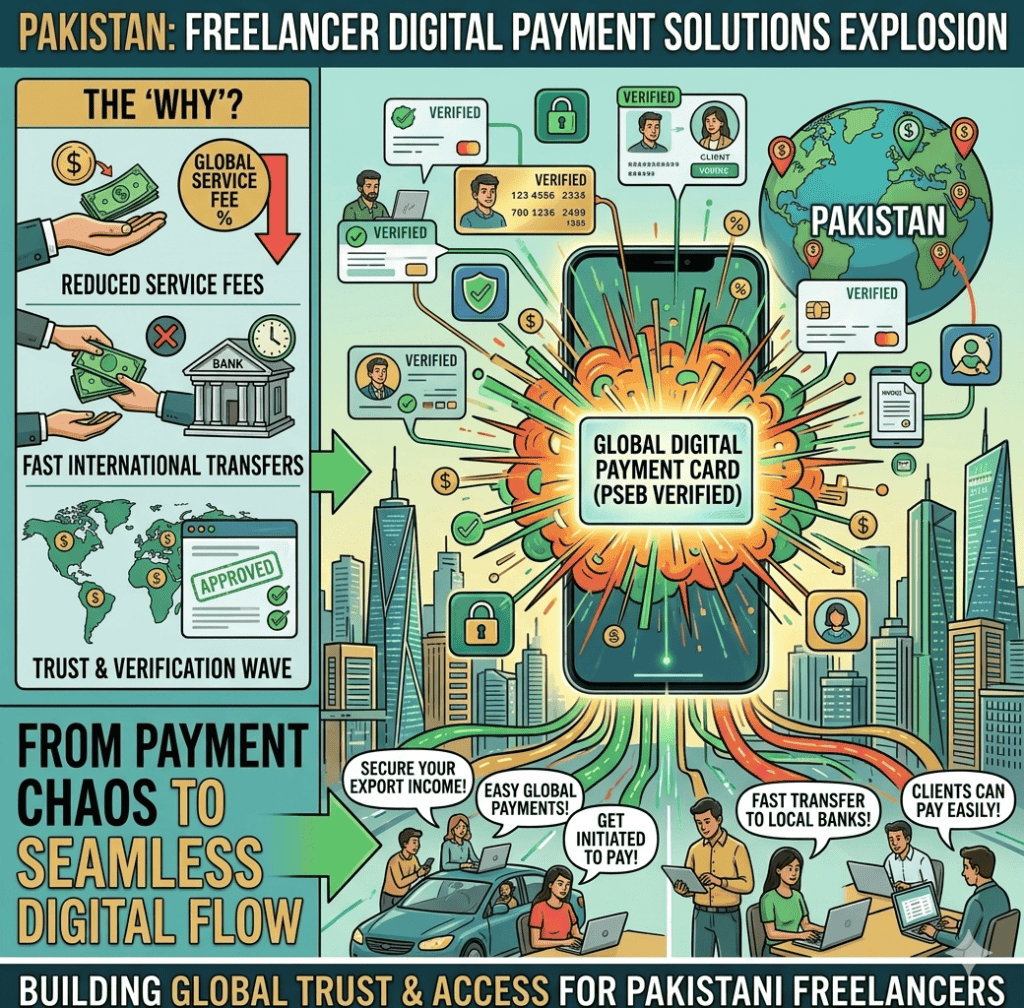
On June 3, 2026, the Tax Payers Alliance Pakistan (TPAP) and the Prime Institute held a press conference warning that the government continues to squeeze documented digital earners instead of expanding the tax base. Their most critical finding: internet and mobile services currently burden digital users at a combined rate of 34.5 percent — a massive digital squeeze that threatens to compress the margins of the very people driving Pakistan’s foreign exchange inflows. This operational pressure hits a sector of immense national importance. Pakistani freelancers have contributed nearly $1 billion in foreign exchange earnings this fiscal year alone. To safeguard this vital capital, digital professionals must act proactively.
What the 34.5% Digital Burden Actually Means
The 34.5 percent figure is not a direct income tax on your revenue. It is the cumulative tax load on telecom services — currently one of the highest such rates in the region — and represents the baseline operational tax that every digital creator pays just to do their job. It is built from several overlapping charges:
- GST on Telecom Services: The current GST on mobile and internet services stands at a high 19.5 percent.
- Advance Income Tax under Section 236: A 15 percent advance income tax on telecom services means that for every Rs. 100 a user loads for mobile data, Rs. 15 goes to the government before a single megabyte is consumed.
- Provincial Services Taxes: Additional administrative service charges on cloud hosting, local SaaS portals, and digital tools levied at the provincial level.
The Ministry of IT and Telecommunication has itself proposed cuts to both the advance income tax on mobile usage and the GST on telecom services in its pre-budget recommendations — a clear acknowledgment from within the state that this tax rate is a barrier to digital growth. Whether those cuts survive the final budget on June 12 remains to be seen. In the meantime, while you cannot control telecom tariffs, your direct income tax structure is entirely within your control.
Your Concessional WHT Rate
The most important number for any Pakistani freelancer is this: 0.25%. If you remain an unregistered operator, commercial banks are mandated to deduct a standard 1 percent withholding tax (WHT) on all incoming foreign remittances. However, if you register your business, the concessional IT export tax rate Pakistan drops to just 0.25 percent WHT on your foreign inflows. The Pakistan Freelancers Association (PAFLA) has aggressively urged the government to retain this 0.25 percent rate for the next ten years, arguing that a low-tax regime is the only way to encourage digital earners to bring their money through formal banking channels. Saving 0.75 percent on every dollar may seem small on a single transaction, but over a year of scaling your services, it translates into thousands of dollars kept in your pocket.
How to Save Tax on Freelance Income Pakistan: 3 Strategic Moves
Securing your PSEB certificate is the foundation of your tax planning, but you must combine it with strong financial habits to completely bulletproof your business:
1. Maintain Active FBR Filer Status
Do not remain a non-filer. Non-filers are hit with punitive withholding taxes on cash withdrawals, banking transactions, and international software purchases. Becoming an active filer on the FBR Iris portal ensures your 0.25 percent withholding tax is officially treated as your final tax liability under the specialized IT export codes, meaning no additional income tax is owed on those foreign earnings.
2. Use a Dedicated Business Account for Foreign Payments
Never mix your personal savings with your business revenue. Open a specialized corporate or digital business bank account dedicated solely to receiving your foreign client payments. Having a dedicated business account makes it much easier to track your foreign inflows, maintain clean audits, and prove to tax authorities that your money is 100 percent derived from legitimate global services.
3. Keep Immaculate Transaction Records
To claim tax exemptions and concessional rates, you must prove that your income consists of legitimate IT exports. Keep clear records of all your client contracts, invoices, platform statements (from Upwork, Fiverr, or direct billing portals), and bank-issued Foreign Remittance Advice (FRA) documents. These records are your ultimate proof of compliance.
The Bottom Line
Today’s 1,756.89-point rally at the PSX reflects one truth: the stock market is choosing optimism. But market sentiment and ground-level policy impact are two different things. The 34.5 percent telecom tax burden is a daily operational cost that no stock market rally eliminates. Your income tax structure, however, is a lever you control entirely — regardless of what the government announces on June 12. The freelancers who treat their work as a real enterprise — getting registered, filing tax returns, and optimizing their bank accounts — will carry a massive structural advantage over those who do not. Use the next three days to get your house in order.
PS: For educational purposes only. Not financial advice. Investing involves risk.