
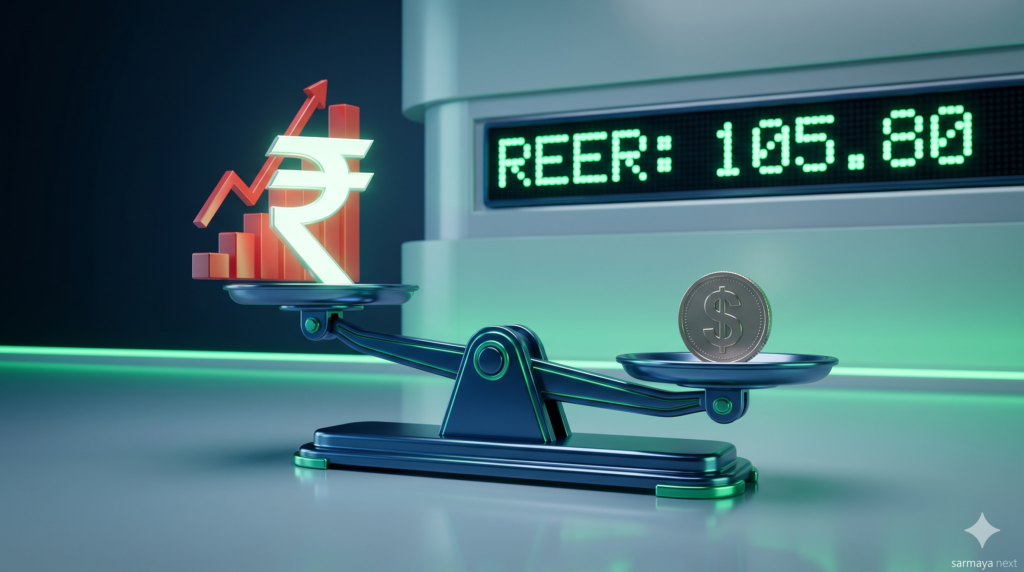
Pakistan’s Real Effective Exchange Rate (REER) has surged to a seven-year high, hitting 105.80 in April. While a stronger Rupee in real terms might sound like good news on paper, it is a double-edged sword that is currently squeezing the purchasing power of freelancers, IT exporters, and local wealth-builders. This seemingly stable Rupee is creating significant distortions in the economy, impacting everything from export competitiveness to the cost of living for those earning in foreign currency.
Understanding this macroeconomic shift is your “Shield” against potential currency corrections and a guide to strategically positioning your financial assets in these uncertain times.
Key Takeaways:
- 7-Year Peak: The State Bank of Pakistan (SBP) reported that the REER rose to 105.80 in April 2026, up from 104.29 in March—marking a 1.45% month-on-month increase and a massive 6.54% year-on-year jump. This surge places the Rupee at its highest real value since 2019, reflecting a sustained period where domestic inflation has outpaced that of Pakistan’s major trading partners, without a corresponding adjustment in the nominal exchange rate.
- The Overvaluation Signal: A REER index above 100 indicates that Pakistan’s goods and services have become relatively more expensive compared to our trading partners. This directly reduces our global trade competitiveness, making Pakistani exports less attractive on the international market and potentially increasing the trade deficit. Sectors like textiles, surgical instruments, and IT services face mounting pressure.
- The Pegged Rupee: While the Nominal Effective Exchange Rate (NEER) edged slightly lower to 37.89, the actual interbank dollar rate remained artificially flat around Rs. 278.77. This managed exchange rate, often maintained to curb imported inflation or stabilize public sentiment, creates a significant disconnect between the Rupee’s real value and its market price, leading to an overvaluation.
- IMF vs. SBP: The IMF’s latest staff report explicitly warns that exchange rate flexibility must remain the first line of defense against external shocks. This signals that the current managed exchange rate may not be sustainable under persistent external pressure, hinting at potential future adjustments if the SBP continues to resist market forces. The IMF views flexibility as crucial for external stability and economic adjustment.
For the non-economist, REER measures the value of the Pakistani Rupee against a basket of currencies of our major trading partners, adjusted for inflation. When REER climbs past 100 to 105.80, it means local inflation is running much higher than our trading partners, but the nominal exchange rate (the interbank dollar rate) is not adjusting to reflect that loss of purchasing power. Imagine your neighbour’s house price staying flat while everyone else’s in the street is rising; eventually, your house becomes relatively more expensive if your income isn’t keeping pace. In Pakistan’s case, domestic costs are soaring, but the dollar conversion rate isn’t compensating for it.
This creates a structural imbalance: your local living costs are skyrocketing, but the nominal USD/PKR rate remains flat, meaning every dollar you bring into the country buys fewer goods and services than it did last year. This directly erodes the real income of anyone earning in foreign currency.
The Insider Take
This 7-year high is a flashing yellow light for the domestic financial ecosystem. Here is how you should position your capital and career to navigate this overvalued phase:
- Prepare for the “Devaluation” Correction: History shows that whenever Pakistan’s REER sustains levels well above 100 (the last 10-year average is 102.68), speculation around a Rupee depreciation restarts. If the SBP yields to IMF pressure to allow the exchange rate to act as a “shock absorber,” we could see a sudden, sharp adjustment in the USD/PKR rate. Previous episodes, such as in 2018 and 2022, saw the Rupee depreciate by significant margins (15-25%) within short periods. Businesses with dollar-denominated liabilities or those heavily reliant on imports should consider hedging strategies, while exporters might see a welcome boost.
- Exporters: Brace for Price Pressures: If you are running an IT agency, a freelance setup, a textile mill, or a physical export business, a high REER means your services and products are becoming relatively more expensive for international clients compared to competitors in India, Bangladesh, Egypt, or Vietnam. This leads to reduced order volumes, narrower profit margins, or the need to absorb losses to remain competitive. Focus on value-added services, cost efficiencies, and exploring non-traditional markets to mitigate this impact.
- The Domestic Purchasing Power Squeeze: Currently, we are experiencing “transitory” inflation, but domestic prices remain stubbornly high while the dollar is flat. This is the worst phase for a dollar-earner because your domestic expenses are rising in real terms. For instance, a freelancer earning $2,000 might find that while their dollar income is stable, the equivalent Rupee amount buys significantly less groceries, fuel, or pays fewer utility bills than it did six months ago. This disincentivizes foreign currency inflows through formal channels, potentially fueling the grey market.
Impact on Imports and Domestic Industry
While exporters suffer, an overvalued Rupee makes imports cheaper in local currency terms. This can temporarily help control inflation by reducing the cost of imported goods, but it simultaneously harms domestic industries. Local manufacturers struggle to compete with cheaper imported alternatives, potentially leading to reduced production, job losses, and a slowdown in industrial growth. This creates a challenging environment for local businesses trying to scale and innovate.
Foreign Investment Perspective
An overvalued currency also deters Foreign Direct Investment (FDI). International investors perceive a higher entry cost when converting their foreign currency into an artificially strong Rupee. Furthermore, the risk of a future, inevitable devaluation creates uncertainty, making Pakistan a less attractive destination for long-term capital compared to economies with more flexible and market-determined exchange rates.
Policy Challenges and Outlook
The SBP and the government face a delicate balancing act. Maintaining an artificially stable exchange rate might offer short-term psychological comfort and help manage inflation expectations by making imports cheaper. However, the long-term costs are significant: erosion of export competitiveness, disincentivizing remittances through official channels, potential depletion of foreign exchange reserves, and increased pressure for a sharper, more painful adjustment down the line. Structural reforms, fiscal discipline, and a commitment to market-based exchange rate determination are crucial for sustainable economic health.
For individuals and businesses, vigilance is key. Diversifying investments, exploring export opportunities with higher value addition, and maintaining a cautious approach to large Rupee-denominated expenditures can help navigate the current economic landscape. The current REER level is a strong indicator of underlying economic imbalances that will eventually need to be addressed.
PS: For educational purposes only. Not financial advice. Investing involves risk.