
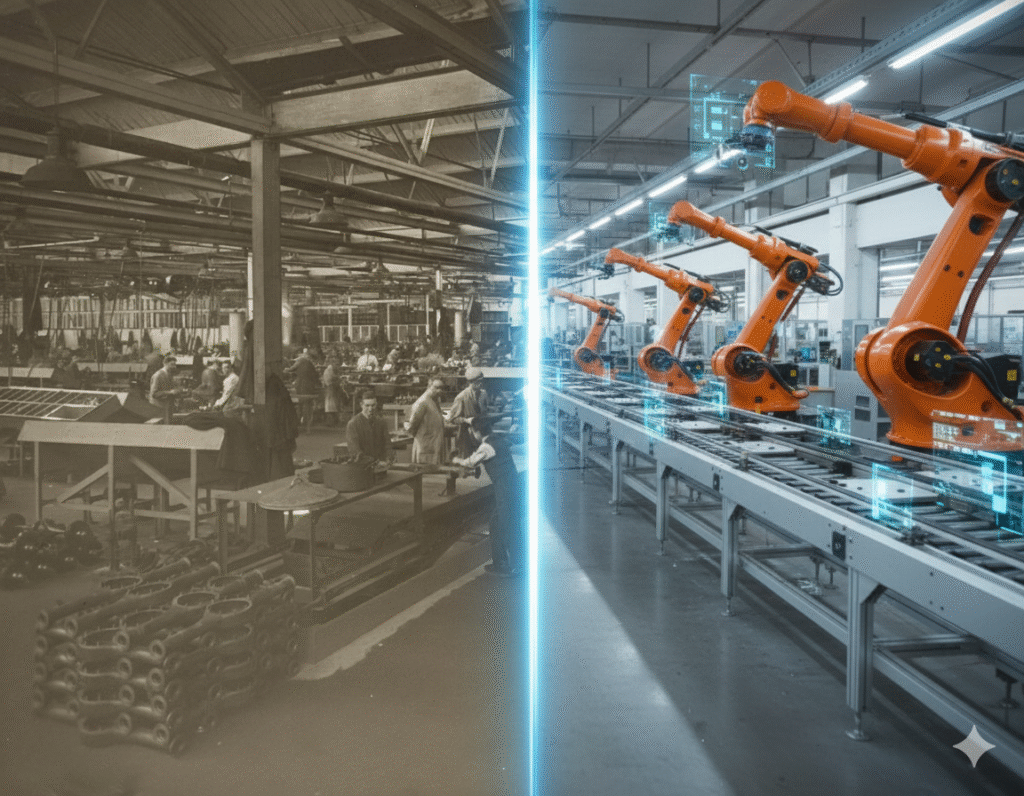
Global food giant Nestlé has announced a major restructuring that includes cutting 16,000 jobs, citing a shift towards automation and a focus on high-growth product lines after missing Q3 earnings expectations. This sweeping move by one of the world’s largest consumer goods companies, a conglomerate operating in 186 countries with over 270,000 employees, sends a potent message across the corporate landscape. For young professionals in Pakistan’s burgeoning corporate and fast-moving consumer goods (FMCG) sectors, this is not merely a distant corporate headline but a critical wake-up call about the rapidly changing nature of work and the skills required for future employability.
Key Takeaways:
Massive Restructuring: Nestlé is cutting 16,000 jobs globally, representing a significant portion of its workforce, as part of a strategic shift to improve profitability and operational efficiency. This isn’t just about trimming fat; it’s a fundamental re-engineering of how the company operates, from production lines to back-office functions and supply chain management. The aim is to create a more agile, technologically integrated enterprise capable of responding faster to market demands.
Automation is the Driver: The company explicitly linked the cuts to increased investment in automation and technology across its production, logistics, and administrative processes. This includes advanced robotics in manufacturing, AI-driven demand forecasting, automated warehousing systems, and Robotic Process Automation (RPA) for routine clerical tasks. The message is clear: any task that is repetitive, rule-based, and predictable is a candidate for automation, freeing human capital for more complex, creative, and strategic roles.
Focus on Premium Products: The move is also designed to pivot away from slower-moving, lower-margin consumer goods towards high-margin, premium products. Categories like pet care (Purina), coffee (Nespresso, Starbucks at Home), and health science products have demonstrated robust growth and higher profitability. This strategic re-alignment reflects evolving consumer preferences, particularly in developed markets, where there’s a growing demand for specialized, high-quality, and experience-driven products over basic commodities.
Market Reacts: The announcement came after Nestlé missed its third-quarter sales forecasts, signaling intense pressure from investors to streamline operations, enhance productivity, and deliver better returns. In a fiercely competitive global market, large corporations are under constant scrutiny to innovate and optimize. The stock market’s reaction often dictates such bold strategic shifts, pushing companies to make tough decisions to secure long-term viability and shareholder value.
The decision by one of the world’s largest employers highlights a trend that is rapidly accelerating: routine and manual tasks are being automated at an unprecedented pace. This isn’t just about factory floors; it impacts roles across supply chain management, administration, customer service, data entry, and even aspects of marketing and finance. Nestlé’s strategy is to build a leaner, more technologically advanced workforce, capable of leveraging digital tools to drive efficiency and innovation.
The Broader Trend: Automation’s Inevitable March
Nestlé’s move is a microcosm of a much larger global phenomenon often referred to as the Fourth Industrial Revolution. According to a report by the World Economic Forum, automation and AI are expected to displace 85 million jobs globally by 2025, while simultaneously creating 97 million new ones. However, the new jobs often require entirely different skill sets, creating a significant challenge for existing workforces. Industries from manufacturing and logistics to finance and healthcare are all undergoing similar transformations, driven by advancements in artificial intelligence, machine learning, robotics, and big data analytics. Companies are increasingly viewing technology not just as a tool, but as a core component of their operational strategy to reduce costs, improve accuracy, and scale operations.
Implications for Pakistan’s Workforce
For the thousands of Pakistanis working in or aspiring to join the FMCG industry, or any corporate sector for that matter, this news is a clear sign that traditional career paths are being rewritten. Pakistan, with its large youth population, faces a dual challenge: creating enough jobs for new entrants and re-skilling the existing workforce. Companies like Nestlé Pakistan, Unilever, P&G, and others operating in the country are likely to follow global trends, albeit at a potentially slower pace due to differing labor market dynamics and investment cycles. Roles in factory operations, basic administrative support, data processing, and even traditional sales and merchandising are vulnerable to automation. Relying solely on a conventional degree and long-term service is no longer a secure strategy. The future belongs to those who can work alongside technology, not be replaced by it.
The Insider Take: What This Means for You.
This isn’t a reason to panic; it’s a reason to prepare. The corporate ladder is changing, and you need to be climbing the right one. Here’s how to future-proof your career in this evolving landscape, with a specific focus on the Pakistani context:
Become the “Automation Expert”: Don’t fear the new systems; learn them. In Pakistan, where digital literacy can be a competitive edge, mastering these tools is even more crucial. Volunteer for projects involving new software implementations (e.g., ERP systems like SAP, Oracle), take online courses in supply chain analytics, digital process management, or even basic coding (Python for data analysis). Become the person who understands how to use technology to make the company money, optimize processes, and drive innovation, not just the person who performs the old job manually. Look for opportunities to implement Robotic Process Automation (RPA) in your department or suggest AI-driven solutions for existing problems.
Upskill Beyond Your Role: The era of single-skill specialization is fading. If you’re in sales, learn digital marketing, e-commerce analytics, and customer relationship management (CRM) software. If you’re in logistics, master data modeling with Power BI or Tableau, and understand predictive analytics for inventory management. For finance professionals, delve into financial modeling with advanced Excel, blockchain basics, and automated auditing tools. These “cross-functional” tech skills, combined with critical soft skills like problem-solving, creativity, adaptability, and emotional intelligence, make you far more valuable and harder to replace than someone with a single, narrow specialty. Seek certifications from platforms like Coursera, edX, or local tech bootcamps.
Build Your Personal Brand: Your security no longer comes from one company or a single job title. It comes from your reputation, your network, and your continuous learning. Be active on LinkedIn, which is a powerful professional networking tool in Pakistan. Share insights about your industry, comment thoughtfully on relevant articles, and connect with recruiters and managers at other companies. Attend industry webinars, virtual conferences, and local meetups to stay updated and expand your professional circle. Your network is your safety net in a rapidly changing job market, offering opportunities for mentorship, collaboration, and future employment.
The Nestlé announcement serves as a stark reminder that the future of work is already here. For Pakistani professionals, embracing this change through proactive skill development and strategic career planning is not just advisable; it’s essential for survival and prosperity in the coming decades.
PS: For educational purposes only. Not financial advice. Investing involves risk.