
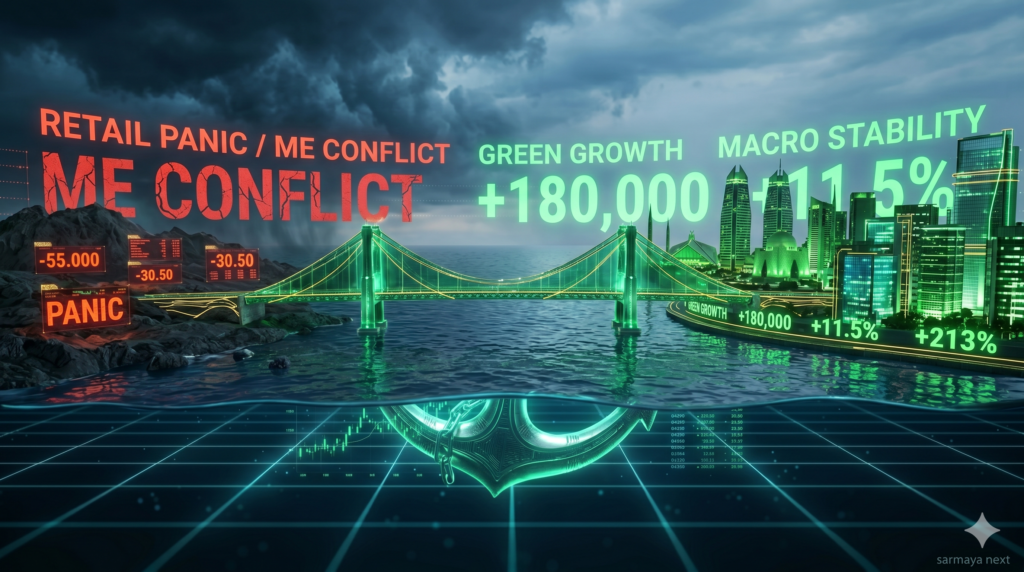
The International Monetary Fund (IMF) mission has successfully concluded its eight-day sit-down in Islamabad, a pivotal engagement that has laid down a clear roadmap for Pakistan’s economic future. This framework is poised to significantly influence the Pakistan Stock Exchange (PSX) and recalibrate the country’s macroeconomic investment outlook for the upcoming twelve months. While public discourse often zeroes in on the immediate implications of aggressive tax targets and utility tariff hikes, the nuanced “Insider Take” for astute investors is the palpable return of institutional credibility. This renewed trust, stemming from consistent engagement and compliance with IMF programs, is the bedrock upon which future investment decisions will be made, signaling a more predictable and stable operating environment.
Key Takeaways:
- The 2% Surplus Mandate: The government has committed to achieving a primary budget surplus of 2% of GDP for FY2027. This ambitious target represents a critical “Shield” against Pakistan’s chronic issue of unsustainable debt accumulation. Historically, Pakistan has struggled with fiscal deficits, leading to a soaring public debt burden. This commitment signals a fundamental shift towards fiscal discipline, aiming to finance government operations without resorting to further borrowing, thereby easing pressure on national resources and improving sovereign creditworthiness.
- Fiscal Targets: A formidable Federal Board of Revenue (FBR) collection target of PKR 15.264 trillion has been set. Achieving this will necessitate a multi-pronged approach, including broadening the tax base, reducing exemptions, and enhancing tax enforcement through digitalization. Concurrently, significant gas and electricity price adjustments are on the cards. These adjustments are crucial for addressing the crippling circular debt in the energy sector, ensuring cost recovery for utilities, and making the power sector financially viable, albeit with short-term inflationary pressures on consumers and industries.
- Macro Stability: Pakistan’s foreign exchange reserves have shown remarkable stabilization, standing at a healthy $20.6 billion. This represents a stark and much-needed recovery from the perilous $4 billion lows witnessed in early 2023, which barely covered a few weeks of imports. This rebound has been facilitated by a combination of factors, including previous IMF tranches, improved export performance, prudent import management, and robust remittances. Enhanced reserves are vital for bolstering currency stability, reducing sovereign risk, and providing a buffer against external shocks, thereby fostering a more attractive environment for foreign investment.
- The MENA Reclassification: Pakistan’s recent shift to the World Bank’s Middle East and North Africa (MENA) AP region is a profound positive signal for the foreign direct investment outlook. This reclassification strategically positions Pakistan within a region known for its capital-rich economies and strong investment appetite. It effectively opens doors to substantial Middle Eastern institutional capital, which often seeks opportunities within its geographical and cultural proximity. This move is expected to facilitate greater capital flows into various sectors, particularly infrastructure, energy, and technology, leveraging the region’s burgeoning wealth and strategic partnerships.
The “Conflict Discount” vs. The “Peace Dividend”
The KSE-100 index currently trades at a price-to-earnings (P/E) ratio of 6.9x, which is significantly lower than its historical average of 8.0–9.0x and well below regional emerging market peers. This noticeable “pessimism gap” is largely driven by a confluence of factors, prominently the ongoing Middle East conflict and its unsettling impact on global oil prices, which surged above $110 per barrel. Geopolitical tensions inherently introduce risk aversion, making investors demand a higher risk premium for assets in developing economies like Pakistan. Beyond the conflict, lingering domestic political uncertainties and persistently high interest rates have also contributed to this subdued valuation.
However, the constructive tone emanating from the IMF discussions suggests that the fiscal anchor, despite external pressures, is holding firm. If the widely rumored 14-point US-Iran memorandum indeed materializes, leading to a de-escalation of regional tensions, we anticipate a significant “Peace Dividend.” Such a scenario would likely see global oil prices retreat, thereby alleviating imported inflation in Pakistan. Consequently, inflation, currently at 7.3%, is expected to drop further, paving the way for the State Bank of Pakistan to resume its much-anticipated rate-cutting cycle. Lower interest rates would stimulate economic activity by reducing borrowing costs for businesses and consumers, boosting investment, and improving corporate profitability.
The Insider Take:
This recent IMF conclusion provides a “credible amber” signal, indicating a substantial upgrade to the domestic investment outlook without being a full ‘all-clear’. It signifies a path towards stability and growth, albeit with inherent risks that require careful navigation. Here is how to strategically play the next 90 days:
- Watch the June 5 Budget: This is unequivocally the primary catalyst for market movement. A meticulously crafted, pro-growth budget that rigorously meets the IMF’s stringent criteria could trigger an immediate 5-8% rally in the KSE-100. Such a budget would signal robust commitment to fiscal reform and stability. Positioning in dividend-yielding blue chips before this date is considered a high-conviction move, as these established companies offer stability, consistent returns, and are generally less susceptible to short-term market volatility.
- Sector Focus: With the government’s steadfast commitment to “cost recovery” in the energy sector, the entire energy chain—particularly exploration and production (E&P) companies—stands to benefit immensely from improved cash flows and reduced circular debt. Conversely, interest-rate-sensitive sectors such as cement, automobiles, and real estate may continue to operate under pressure until the policy rate (currently 11.5%) moves back into single digits. These sectors rely heavily on consumer financing and construction activity, which are directly impacted by the cost of borrowing.
- The Arbitrage of Reality: The market has experienced a correction of approximately 15% from its January highs. This correction largely reflects an overblown fear premium related to the Middle East conflict and domestic uncertainties. However, it largely ignores the fundamental improvements in Pakistan’s foreign exchange reserves, the declining current account deficit, and the renewed commitment to IMF compliance, which collectively paint a more optimistic economic picture. Buying into this “reality gap” at a historically low 6.9x P/E is often considered a winning strategy, allowing investors to capitalize on the eventual convergence of market perception with underlying economic fundamentals.
PS: For educational purposes only. Not financial advice. Investing involves risk.