
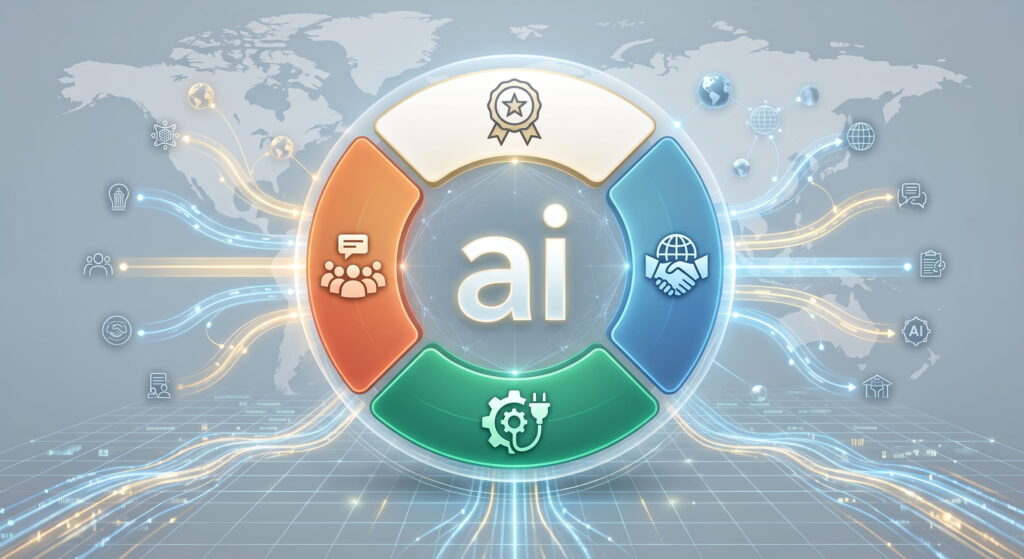
The Prime Minister has ordered the swift implementation of Pakistan’s national AI policy. The government is officially treating Artificial Intelligence as a critical tool to boost economic development and modernize the country’s key sectors. This directive signals a profound shift, acknowledging AI not merely as a technological trend but as a fundamental pillar for national progress and global competitiveness.
Pakistan’s AI Imperative: A Strategic Mandate
In an era defined by rapid technological advancements, nations worldwide are racing to harness the transformative potential of Artificial Intelligence. For Pakistan, a developing economy with a burgeoning youth population, embracing AI is not just an option but a strategic imperative. The Prime Minister’s direct involvement underscores the urgency and high-level commitment to integrate AI across various facets of the economy and public services. This national policy aims to position Pakistan as a regional player in AI development and application, driving innovation, enhancing productivity, and creating new avenues for economic growth.
A Strategic Mandate for Economic Growth
The government’s focus on AI as a critical tool for economic development stems from its potential to revolutionize industries. From optimizing supply chains and enhancing agricultural yields to modernizing financial services and improving healthcare delivery, AI offers solutions to long-standing challenges. This policy is expected to lay the groundwork for a robust AI ecosystem, fostering research and development, nurturing local talent, and attracting foreign investment in AI-related ventures. The ultimate goal is to leverage AI to improve the quality of life for Pakistani citizens and ensure sustainable economic prosperity.
The Ripple Effect: Accelerating AI Adoption
A directive from the highest level creates a powerful ripple effect. It pressures ministries and state-linked sectors to allocate budgets and demonstrate progress, which in turn forces private companies to accelerate their own AI adoption to stay competitive. This top-down approach ensures that AI integration is not fragmented but a coordinated national effort. The implications for the job market and skill development are immediate and far-reaching, demanding a proactive response from individuals and institutions alike.
Government-Led Digital Transformation
Government ministries, state-owned enterprises (SOEs), and public service departments will be at the forefront of this transformation. Sectors like education, health, urban planning, and defense are expected to explore and implement AI solutions for efficiency, data analysis, and service delivery. This will necessitate internal capacity building, training programs for civil servants, and the procurement of AI-driven technologies and expertise. The National IT Board (NITB) and Pakistan Software Export Board (PSEB) are likely to play pivotal roles in guiding and facilitating this public sector AI adoption.
Private Sector’s Urgent Need to Adapt
The private sector, particularly in IT, finance, telecommunications, manufacturing, and e-commerce, will feel immense pressure to adopt AI. Companies that fail to integrate AI into their operations risk falling behind competitors who leverage it for cost reduction, enhanced customer experience, and innovative product development. This competitive pressure will fuel a rapid demand for AI-literate professionals, driving an unprecedented shift in corporate hiring strategies and skill requirements. For you, this means the corporate demand for AI-related competencies is about to shift from a gradual trend into an urgent business need.
Key Pillars of Pakistan’s AI Policy (2026)
While the full details of the policy are being implemented, national AI strategies typically focus on several key areas. These pillars are designed to create an enabling environment for AI development and deployment, ensuring that Pakistan can effectively harness this technology.
Fostering Innovation and R&D
A critical component will be the establishment of AI research centers, incubators, and accelerators in collaboration with universities and industry. This focus on R&D aims to cultivate indigenous AI solutions tailored to Pakistan’s specific needs, encouraging startups and fostering a culture of innovation. Investment in cutting-edge research will be crucial for developing proprietary AI technologies and intellectual property.
Skill Development and Capacity Building
Recognizing the existing skill gap, the policy will likely prioritize comprehensive training programs, curriculum reforms in educational institutions, and partnerships with global tech giants. This includes not only advanced AI engineering but also foundational digital literacy and AI awareness across all levels of education and professional development. The aim is to create a large pool of AI-ready professionals capable of driving the nation’s digital transformation.
Ethical AI and Data Governance
As AI becomes more pervasive, establishing robust ethical guidelines and data governance frameworks is paramount. The policy is expected to address issues of data privacy, algorithmic bias, transparency, and accountability. This ensures that AI development and deployment are conducted responsibly, safeguarding citizen rights and building public trust in AI technologies.
Navigating the New AI-Driven Job Market
The acceleration of AI adoption will fundamentally reshape the job market. While some routine tasks may be automated, a plethora of new roles requiring human-AI collaboration, critical thinking, and specialized AI skills will emerge. This isn’t just about creating jobs for data scientists; it’s about embedding AI competency across all professional domains.
Beyond Traditional IT Roles
The demand will extend beyond traditional software development and data science. We will see a surge in roles like AI project managers, AI ethicists, prompt engineers, AI trainers, machine learning operations (MLOps) engineers, and business analysts specializing in AI integration. Every sector, from marketing to human resources, will require individuals who can understand, implement, and manage AI tools to enhance their respective functions.
The Power of Practical Application
Don’t just learn AI theory; master a specific, high-demand AI tool. Your immediate goal isn’t to become a data scientist, but to become the person in your department who can identify a business problem and build a compelling case for how a specific AI tool can solve it for a measurable return on investment (ROI). This practical, problem-solving approach will differentiate you in a competitive market. Focus on demonstrating tangible value through AI applications.
High-Demand AI Tools and Competencies
To thrive in this evolving landscape, individuals need to focus on acquiring practical skills in widely adopted AI technologies. Understanding the capabilities and limitations of these tools is crucial for effective implementation.
Focus on Generative AI and Automation
Tools related to Generative AI (e.g., large language models like GPT, image generation models) and AI-driven automation platforms (e.g., Robotic Process Automation with AI capabilities, intelligent workflow automation) are experiencing explosive growth. Proficiency in prompt engineering, fine-tuning pre-trained models, and integrating AI APIs into existing systems will be highly valued. Knowledge of cloud AI services (AWS SageMaker, Google AI Platform, Azure ML) will also be critical for deployment and scalability.
Data-Driven Decision Making
Beyond specific tools, a fundamental understanding of data analytics, machine learning principles, and statistical modeling remains essential. The ability to interpret AI outputs, ensure data quality, and make data-driven decisions based on AI insights will be a core competency across various roles. This includes understanding model biases and ensuring ethical AI deployment.
Pakistani Market: Opportunities and Challenges
Pakistan’s AI journey presents unique opportunities and challenges. Leveraging its demographic dividend and digital aspirations will be key to success.
Leveraging a Young Workforce
With a large youth population, Pakistan has a significant advantage in terms of human capital. Investing in their AI education and training can transform this demographic into a powerful force for innovation and economic growth. The potential for remote work and freelancing in the global AI market also offers significant avenues for Pakistani talent.
Overcoming Infrastructure Hurdles
Challenges include adequate digital infrastructure, access to high-quality data, and consistent policy implementation. Addressing these hurdles through public-private partnerships and strategic investments will be crucial for realizing the full potential of the AI policy. Furthermore, ensuring equitable access to AI education across urban and rural areas will be vital for inclusive growth.
Conclusion: Your Role in Pakistan’s AI Future
Pakistan’s AI Policy 2026 is more than just a government initiative; it’s a call to action for every professional and aspiring talent. The landscape is shifting rapidly, and those who proactively adapt, acquire relevant skills, and embrace an AI-first mindset will be the ones to thrive. By focusing on practical application, mastering specific tools, and understanding the broader implications of AI, you can play a pivotal role in shaping Pakistan’s technological and economic future.
PS: For educational purposes only. Not financial advice. Investing involves risk.