
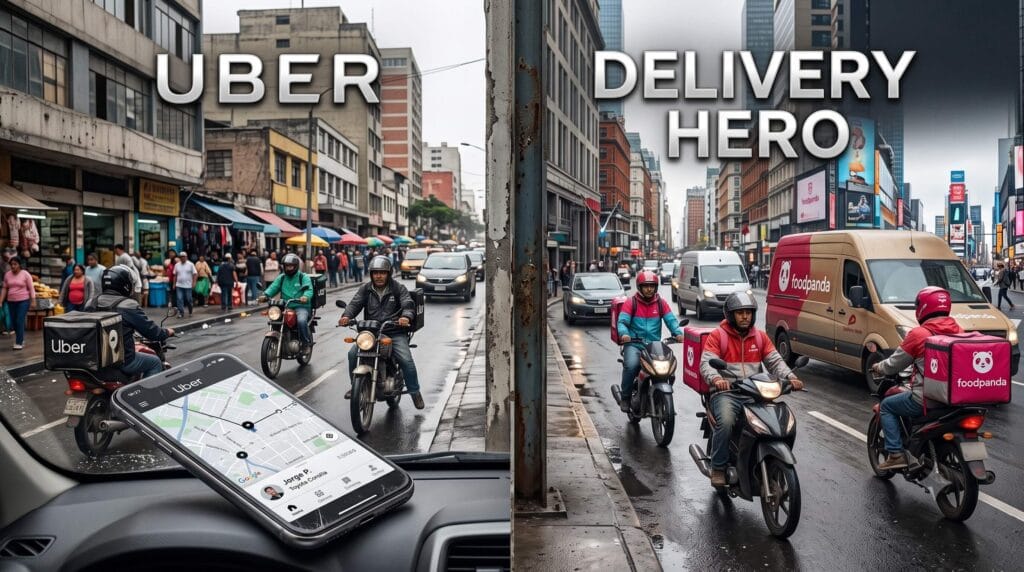
Uber has officially moved to significantly expand its international reach within the highly competitive Global Food Delivery Market, agreeing to acquire Delivery Hero in a substantial $14.8 billion all-stock deal. This strategic move is poised to nearly double Uber’s operational footprint, extending its presence to nearly 100 markets across Europe, the Middle East, Latin America, and Asia, solidifying its position as a dominant delivery force outside of China.
What Happened
After weeks of intense market speculation, Uber formally announced its definitive agreement to acquire German-based delivery giant Delivery Hero for an estimated $14.8 billion in equity value. Under the terms of the transaction, Delivery Hero shareholders will receive Uber common stock, effectively combining two of the largest food delivery platforms outside of mainland China into a single consolidated logistics powerhouse.
In parallel with the merger agreement, Delivery Hero entered into a binding agreement to divest its business operations in 14 markets where Uber Eats already maintains an established leading presence. These overlapping assets are being sold to New York-based private investment firm SSW Partners for approximately $1.6 billion in cash, streamlining the post-merger integration process and mitigating immediate antitrust overlap concerns in key metropolitan centers.
The transaction represents one of the largest consolidations in the history of the gig economy. However, the deal remains subject to regulatory review and approval by competition watchdogs across multiple jurisdictions in Europe and the Middle East, where market concentration in food delivery and quick commerce has faced heightened regulatory scrutiny.
Analysis: Consolidation and Margin Expansion in Global Delivery
The acquisition marks a decisive turning point in the economics of global on-demand delivery. For years, the sector has been characterized by hyper-competition, heavy promotional discounting, and fragmented market share that depressed operating margins for platform operators across Europe, Southeast Asia, and the Middle East.
By absorbing Delivery Hero’s extensive courier infrastructure, established restaurant partnerships, and grocery quick-commerce networks (including Dmarts), Uber achieves massive scale advantages. The combined entity will benefit from higher route density for delivery couriers, cross-selling opportunities across ride-hailing and food delivery, and significantly reduced customer acquisition costs.
| Key Deal Metric | Details |
|---|---|
| Transaction Value | $14.8 Billion (All-Stock) |
| Geographic Footprint | ~100 International Markets |
| Asset Divestiture | 14 Overlapping Markets to SSW Partners ($1.6B) |
| Core Strategic Focus | Quick Commerce, Route Density & Cross-Platform Membership |
Key Takeaways for Investors and Platform Operators
- Global Duopoly Formation: The merger accelerates the consolidation of global food delivery into a handful of mega-platforms, leaving Uber and DoorDash/Just Eat as the primary Western operators.
- Quick-Commerce Integration: Delivery Hero’s extensive dark store network provides Uber with an immediate, scalable foothold in grocery and 15-minute essentials delivery without starting from scratch.
- Antitrust Clearance Hurdles: While the $1.6B divestment to SSW Partners resolves primary overlap concerns, national competition authorities in key European markets will closely examine merchant commission power.
Sources & Reference Data
Reporting and data synthesized from verified corporate announcements and regulatory disclosures by: TechCrunch, Delivery Hero SE Investor Relations, and Uber Technologies Inc.
PS: For educational purposes only. Not financial advice. Investing involves risk.